
CHAPTER 08 · PLASTERING · MOORABBIN
When old cabinets, rangehoods or a splashback come off, the wall behind is rarely ready for a new finish. Ivan Bodnar repairs, patches or replaces plasterboard so whatever goes on next, whether tiles, paint or new joinery, has a sound, flat surface to sit on.
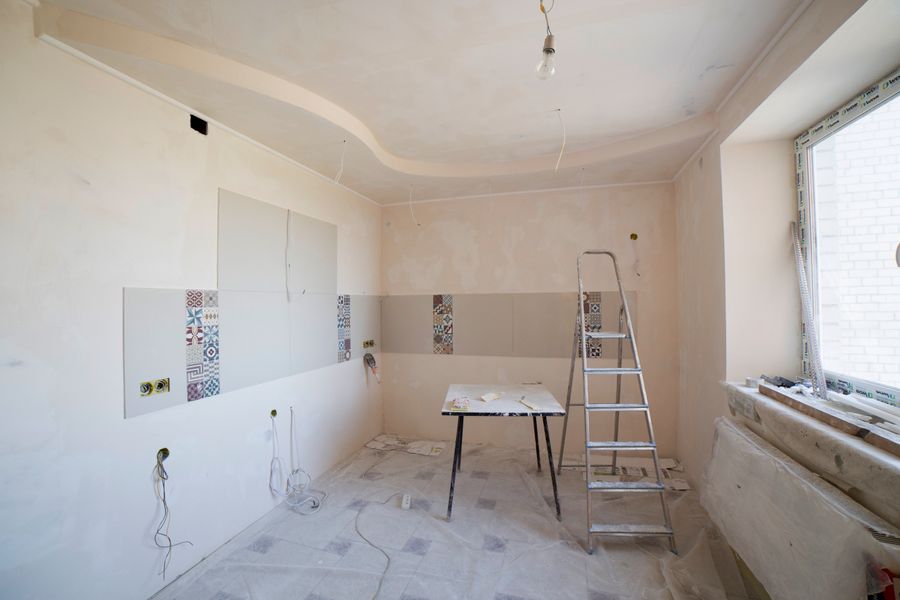
Reference photo: unfinished plaster and exposed wiring mid-renovation.
SCOPE ON THIS SHEET
— Patching damaged plasterboard
— Replacing soft, cracked or missing sections
— Setting, jointing and sanding ready for paint
— Preparing walls for splashback tiling
Structural changes and licensed electrical or plumbing work are handled separately, by the right specialists.
08
CHECKPOINTS · WALLS
These are the things Ivan looks for once the old joinery is removed, before deciding to patch or replace.
01 · FIXINGS AND CUT-OUTS
Old screw holes, hanging-rail fixings and cut-outs for pipes or power points that no longer suit the new layout. Small holes can be filled. Larger openings usually need a properly backed patch.
02 · DAMAGE FROM THE OLD SPLASHBACK
Removing old tiles often tears the face paper or takes pieces of board with them. Depending on how much comes away, the area is patched or a new sheet goes in.
03 · SIGNS OF MOISTURE
Staining or soft board near the sink or dishwasher points to a cause that needs to be found before anything is covered up. If it isn’t, the same damage tends to come back under the new finish.
04 · FLATNESS AND STRAIGHTNESS
New benchtops, overhead cabinets and tiles make an uneven wall obvious. Before any fixing starts, Ivan checks the wall with a straight edge and corrects problem areas.

SURFACE PREPARATION
The board has to be firmly fixed, suited to where it sits and clean enough for the adhesive to bond. The set-out is planned so the cuts around windows, power points and the rangehood fall evenly. See Tiling for splashback options.
Joints are set and sanded, and patches are feathered out so they disappear under paint. New plaster is sealed before the top coats go on. Light coming in from a window across the wall shows every ridge, so that is the light it is checked in. More on Interior & Exterior Painting.
Small, localised damage is usually patched. Board that is soft, crumbling or affected by moisture is usually cut back and replaced. That decision is made on site, once the wall can be seen properly.
LICENSED TRADES & REGULATED WORK
Plastering covers the lining, not the structure behind it. Removing or altering a wall, or making a new opening, may involve load-bearing framing. That needs appropriate engineering input and may need approvals before work starts. Ivan does not provide structural engineering.
Exposed walls are also the right time to relocate power points, lighting or plumbing. Licensed electrical and plumbing work is carried out by appropriately authorised specialists, and it needs to be finished before the wall is closed up. More detail: Licensed Trades & Regulated Work.
Ivan Bodnar is an independent sole trader. He does not claim trade licences or builder registration that haven’t been verified.
An inspection cannot reveal every concealed issue. Scope, permits, registration, insurance and licensed trade requirements vary from project to project.
RELATED READING
What May Be Found Behind Old Kitchen Cabinets
What to Check Before Replacing a Splashback
Surface Preparation Before New Finishes
If your walls are marked, patched or exposed after old joinery comes out, send Ivan an enquiry or call 0413 142 055 to arrange an on-site assessment.